Recent Post

How to Import Eco-Friendly Packaging from India: A Complete Step-by-Step Guide for Global Buyers

Introduction
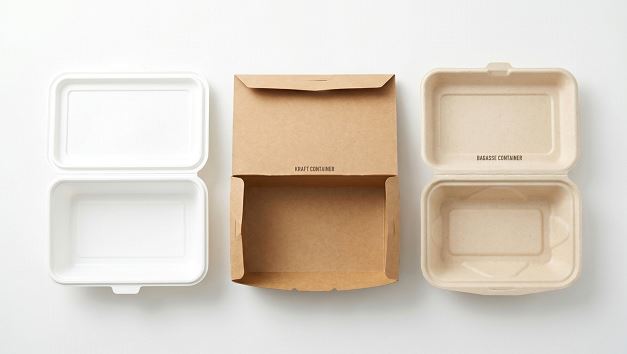
India has become one of the world’s most important sources of eco-friendly packaging products — from kraft paper bags and bagasse tableware to paper cups, wooden cutlery, and custom printed boxes. For buyers in the USA, UAE, Ghana, Australia, and Europe, sourcing directly from India offers significant cost advantages, strong customisation flexibility, and access to genuinely eco-friendly materials produced at scale.
But for first-time importers, the process of sourcing from India can seem complicated. What documents do you need? How do you verify a supplier? What are the shipping terms? How do you handle customs?
This guide answers every one of these questions clearly and practically. By the end, you will know exactly how to find, verify, order from, and import packaging from an Indian supplier — with confidence.
Step 1: Define Your Packaging Requirement Clearly
Before you contact any supplier, you need to be clear about what you want. Vague enquiries get vague responses — and waste everyone’s time. For packaging products, your specification should include:
| Specification Point | Example |
|---|---|
| Product type | Kraft paper bags — twisted handle |
| Size | 25cm x 10cm x 32cm (L x W x H) |
| Material / GSM | 100 GSM natural brown kraft paper |
| Printing | 2-colour logo print on one side |
| Quantity | 10,000 pieces (trial) or 50,000 pieces (bulk) |
| Certification needed | Food-grade? FDA compliant? FSC certified? |
| Destination port | Port of Los Angeles, USA / Tema, Ghana / Jebel Ali, UAE |
| Delivery timeline | Within 45 days of order confirmation |
Step 2: Find and Verify a Reliable Indian Supplier
Finding a supplier is easy — finding a reliable one takes more care. Here are the most trusted ways to source verified Indian packaging exporters:
Online Platforms
⦁ Alibaba.com — largest B2B platform, check Trade Assurance and Verified Supplier badges
⦁ IndiaMART — India’s largest domestic B2B platform, good for direct factory contact
⦁ TradeIndia — similar to IndiaMART with many packaging exporters
⦁ LinkedIn — search for export managers at Indian packaging companies
How to Verify a Supplier — 5 Key Checks
⦁ Ask for their IEC (Import Export Code) — all legitimate Indian exporters have one. You can verify it on dgft.gov.in
⦁ Ask for their GSTIN (GST registration number) — verifiable on the GST government portal
⦁ Request their company registration documents or UDYAM certificate
⦁ Ask for sample shipments before bulk orders — any serious supplier will accommodate this
⦁ Check if they have export history — ask for previous buyer references or shipping documents

Step 3: Request Samples and Approve Quality
Never place a bulk order without first approving a physical sample. This is non-negotiable for packaging products because quality — paper thickness, printing accuracy, handle strength, and construction — varies significantly between manufacturers.
Standard sample process with Indian exporters:
⦁ Send your specification and request a pre-production sample
⦁ Good exporters dispatch samples within 7–10 working days
⦁ Sample shipping cost is typically paid by the buyer (USD 30–80 via courier)
⦁ Review the sample against your specification — check weight, print quality, dimensions, and strength
⦁ If approved, proceed to place formal purchase order
⦁ If adjustments needed, request a revised sample before bulk production
Step 4: Understand Pricing and Incoterms
Indian exporters quote prices using international trade terms called Incoterms. The two most common for packaging imports are:
FOB — Free On Board
The supplier delivers the goods to the port of origin (e.g., Mundra or Nhava Sheva in India) and loads them onto the vessel. From that point, all costs and risks transfer to the buyer. FOB pricing is typically lower because the buyer arranges their own freight.
Example: FOB Mundra USD 0.45 per piece for kraft bags
CIF — Cost, Insurance and Freight
The supplier pays for shipping and insurance to your destination port. CIF pricing is higher but simpler — you just pay one price and receive the goods at your port. Recommended for first-time importers.
Example: CIF Tema (Ghana) USD 0.62 per piece for kraft bags
Tip for First-Time Importers:
Start with CIF pricing for your first order. Once you have a freight forwarder and are comfortable with the process, switch to FOB for better pricing on repeat orders.
Step 5: Key Export Documents You Will Receive
A legitimate Indian exporter will provide all of these documents with your shipment. If any are missing, follow up before the shipment departs:
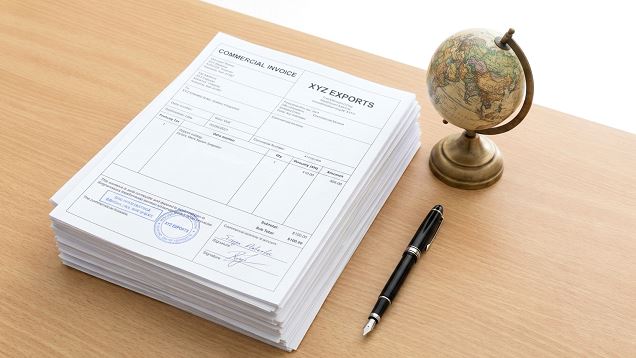
⦁ Commercial Invoice — itemised list of goods with price, quantity, and value
⦁ Packing List — detailed breakdown of how goods are packed in each carton
⦁ Bill of Lading (BL) — issued by the shipping company, this is the title document for your goods
⦁ Certificate of Origin (COO) — confirms goods are manufactured in India (important for duty benefits under trade agreements)
⦁ Phytosanitary Certificate — required for some natural materials like bagasse and wooden cutlery
⦁ Test Reports / Quality Certificates — food-grade certification, FSC, or other compliance documents as required
Step 6: Customs and Import Duties — By Marke
USA
Kraft paper bags (HS Code 4819.40) attract import duties in the range of 0–5% depending on the specific product. Some eco-certified products may qualify for duty reductions. You will need a customs broker to clear goods through US Customs (CBP). FDA food-grade certification is required for food contact packaging.
UAE
UAE has a standard 5% import duty on most packaging products. The UAE has a relatively straightforward import process. Many Indian exporters have existing freight and customs relationships in Dubai, making the process smooth.
Ghana
Ghana applies import duties plus VAT (15%) on most imported goods. The total landed cost including duties typically adds 20–35% to the FOB price. Working with a local clearing agent in Tema or Accra is strongly recommended for first-time importers.
Australia
Australia has a Free Trade Agreement (FTA) with India (ECTA — signed 2022) which reduces or eliminates import duties on many packaging products. This makes Indian packaging exceptionally competitive in the Australian market right now.
Step 7: Shipping Timelines — What to Expect
| Destination | Production Time | Sea Freight Time |
|---|---|---|
| USA (Los Angeles) | 20–30 days | 22–28 days |
| UAE (Jebel Ali) | 20–30 days | 7–10 days |
| Ghana (Tema) | 20–30 days | 20–25 days |
| Australia (Sydney) | 20–30 days | 18–22 days |
| UK (Felixstowe) | 20–30 days | 18–22 days |

Conclusion
Importing eco-friendly packaging from India is a straightforward process once you understand the steps. The key to success is: define your requirement clearly, verify your supplier properly, always sample before bulk, and work with an experienced exporter who handles documentation professionally.
India offers an unmatched combination of quality, customisation, eco-certification, and competitive pricing for packaging buyers worldwide. And with the India-Australia ECTA trade agreement, the India-UAE CEPA agreement, and expanding trade relationships globally, sourcing from India has never been more commercially attractive.
🚢 Ready to Start Your First Import from India?
JP International Trade is a registered Indian exporter (IEC: AAWFJ8292R) specialising in kraft paper bags, bagasse packaging, eco cutlery, and custom packaging solutions.
✅ Full export documentation handled — Invoice, BL, COO, Packing List
✅ FOB Mundra / Nhava Sheva pricing available
✅ CIF to your port available
✅ Sample orders welcome — 7-10 day dispatch
✅ 24-hour quote response